
Dr. Soham Dinda, Consultant Orthopaedic and Trauma Surgeon in Tamluk, Purba Medinipur (MBBS Hons, NRSMCH; MS Orthopaedics, RG Kar MC&H), explains TKR, THR, joint replacement: symptoms, causes, tests and treatment options.
What is joint replacement?
In joint replacement surgery, the damaged surfaces of a worn-out joint are removed and replaced with smooth implants made of metal and medical-grade plastic. Total Knee Replacement (TKR) and Total Hip Replacement (THR) are among the most successful operations in orthopaedics for ending long-standing arthritis pain and improving walking.
Dr. Soham Dinda offers TKR and THR assessment and surgery for patients in Tamluk and across Purba Medinipur.
When should you consider knee or hip replacement?
Joint replacement is usually considered only after simpler treatments have stopped helping. Talk to an orthopaedic surgeon if:
- Pain in the knee or hip is constant, even at rest or at night
- You struggle to walk, climb stairs, sit on the floor or get up from a chair
- X-rays show advanced arthritis with loss of joint space
- Medicines, exercises, walking aids or injections no longer give lasting relief
- The joint is becoming bent or deformed (for example, bow legs)
Surgery is a decision made together. Many patients with milder arthritis do well without an operation, so you will be told honestly if you do not need one yet.
Causes that lead to joint replacement
- Osteoarthritis, the most common cause, from wear and tear with age
- Rheumatoid arthritis and other inflammatory arthritis
- Avascular necrosis (loss of blood supply) of the hip joint
- Hip fractures or old injuries that damaged the joint
- Severe deformity from long-standing joint disease
How the surgery is planned
Before surgery you will have a full examination, X-rays and blood tests, and your heart, sugar and blood pressure are checked so that surgery is as safe as possible. The type and size of implant are chosen for your joint, age and activity level. Anaesthesia is planned with an anaesthetist, and you are told what to expect on the day of surgery and in the first few days after.
Recovery after TKR or THR
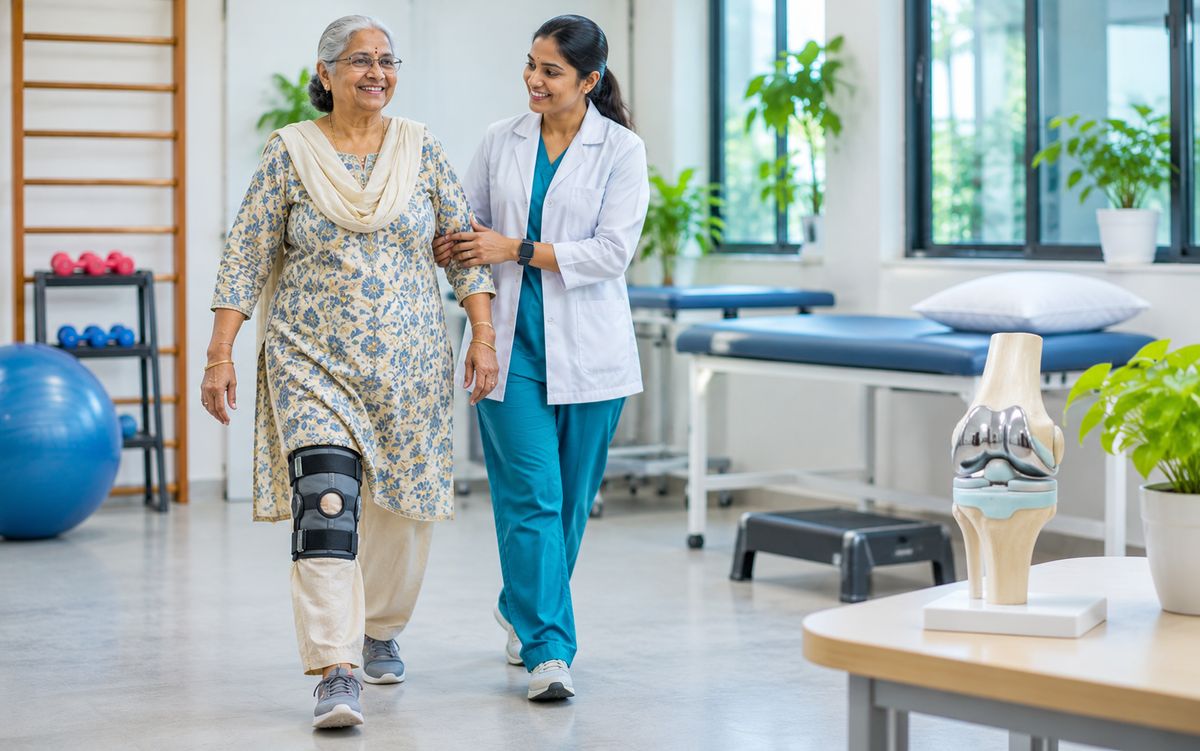
Recovery is a partnership between surgery and rehabilitation. Most patients are helped to stand and take their first steps soon after surgery with a walker, and physiotherapy continues for several weeks.
- Pain control and early walking are encouraged to reduce stiffness and clots.
- A walker or stick is used for a few weeks, then you gradually walk without support.
- Exercises to bend and straighten the knee, or strengthen the hip, are done daily.
- Wound care and follow-up visits make sure healing is on track.
- Most people return to light daily activity within weeks and continue improving over months.
Your own recovery time depends on your age, health and how well you follow the exercise plan.
Risks to know about
Like any major surgery, joint replacement carries risks such as infection, blood clots, stiffness and, rarely, implant problems. These are discussed with you before surgery along with the steps taken to lower them. Controlling diabetes, stopping smoking and keeping a healthy weight before surgery all improve results.
Joint replacement in Tamluk with Dr. Soham Dinda
With an MS in Orthopaedics from RG Kar Medical College, Kolkata, Dr. Dinda assesses every patient individually. If surgery is not needed, he will guide you on non-operative options first. If it is needed, he will explain the procedure, implant choice and rehabilitation in simple language so that you and your family can decide with confidence.
সংক্ষেপে বাংলায়
হাঁটু বা হিপের ব্যথা এত বেশি যে হাঁটাচলা, সিঁড়ি ভাঙা বা বিছানা থেকে ওঠাও কষ্টকর হলে জয়েন্ট রিপ্লেসমেন্টের কথা ভাবা হয়। তবে সবার অপারেশন লাগে না। তমলুকে ডা. সোহম দিন্দা আগে পরীক্ষা ও এক্স-রে করে সৎ পরামর্শ দেন, ওষুধ-ব্যায়ামে কাজ হলে অপারেশন ছাড়াই চিকিৎসা হয়। বিস্তারিত জানতে ফোন করুন ৮৯১০০৫১০৭২।
This page is for general awareness and does not replace a consultation. Please see a qualified doctor for diagnosis and treatment.